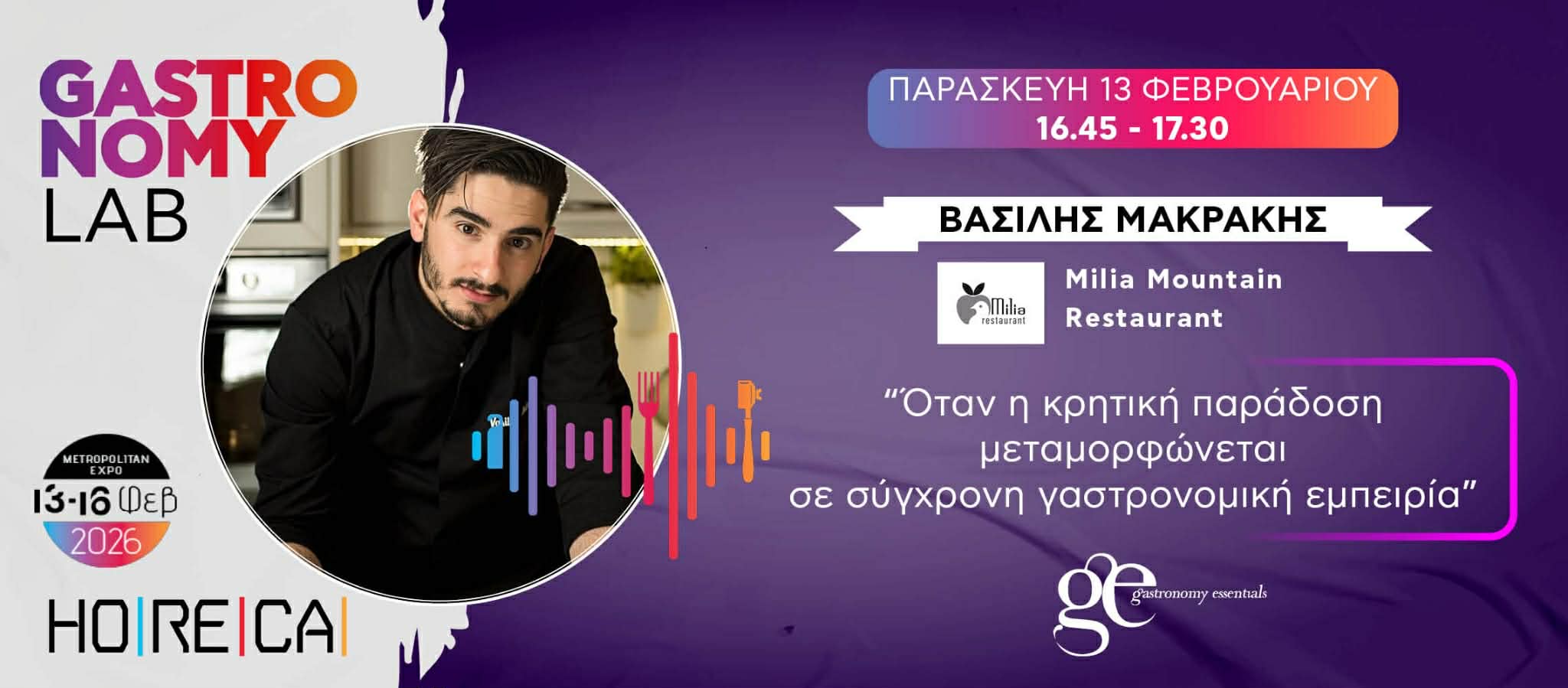
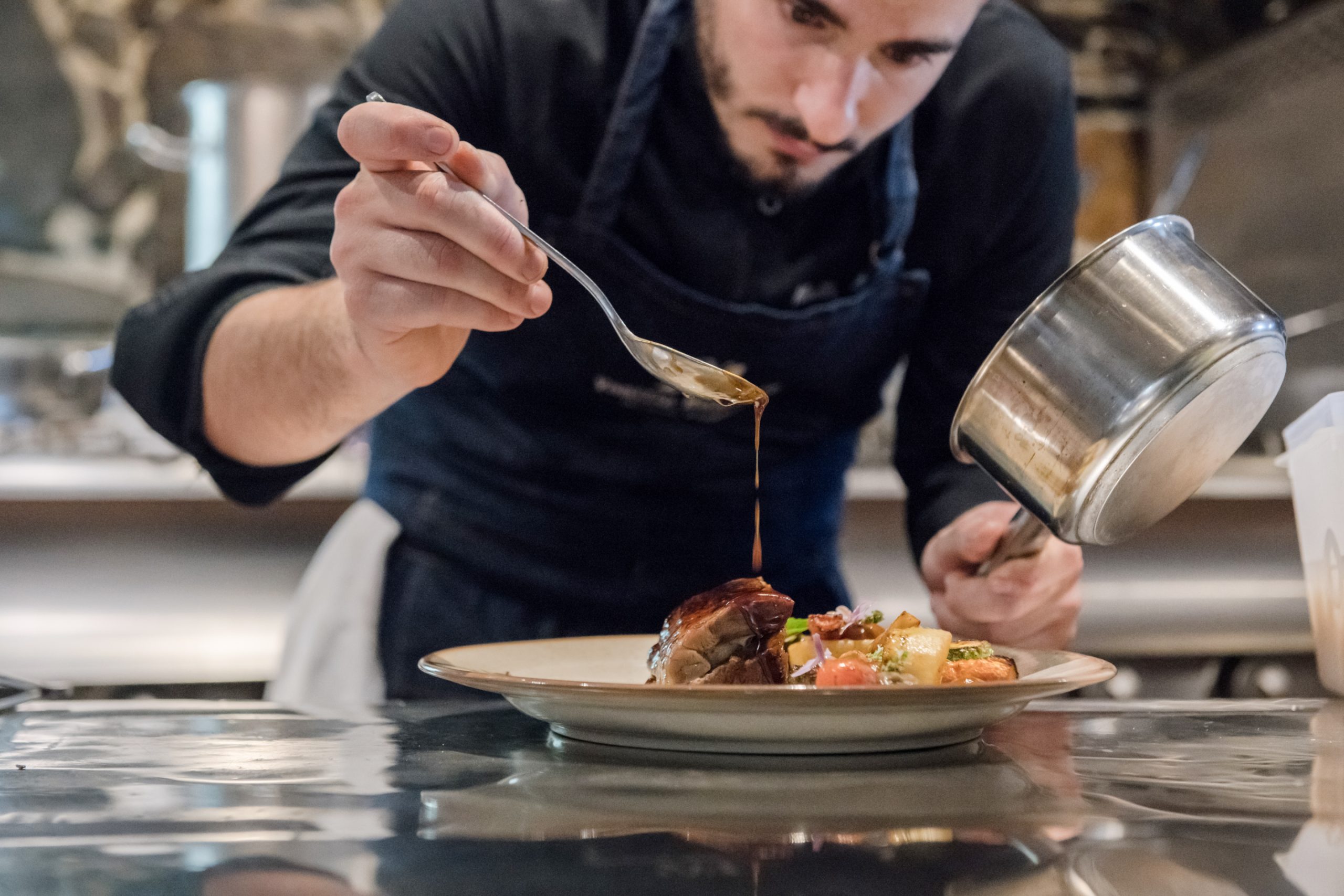
Get ready for some Cretan magic at #HORECA2026 in Athens! This Friday (Feb 13, 16:45–17:30), Chef Vasilis Makrakis from Milia Restaurant will present ‘When Cretan tradition transforms into a contemporary gastronomic experience’ at the Gastronomy Lab. Sustainable Cretan flavors meet modern innovation – can’t wait! #CretanCuisine #Gastronomy #Crete”
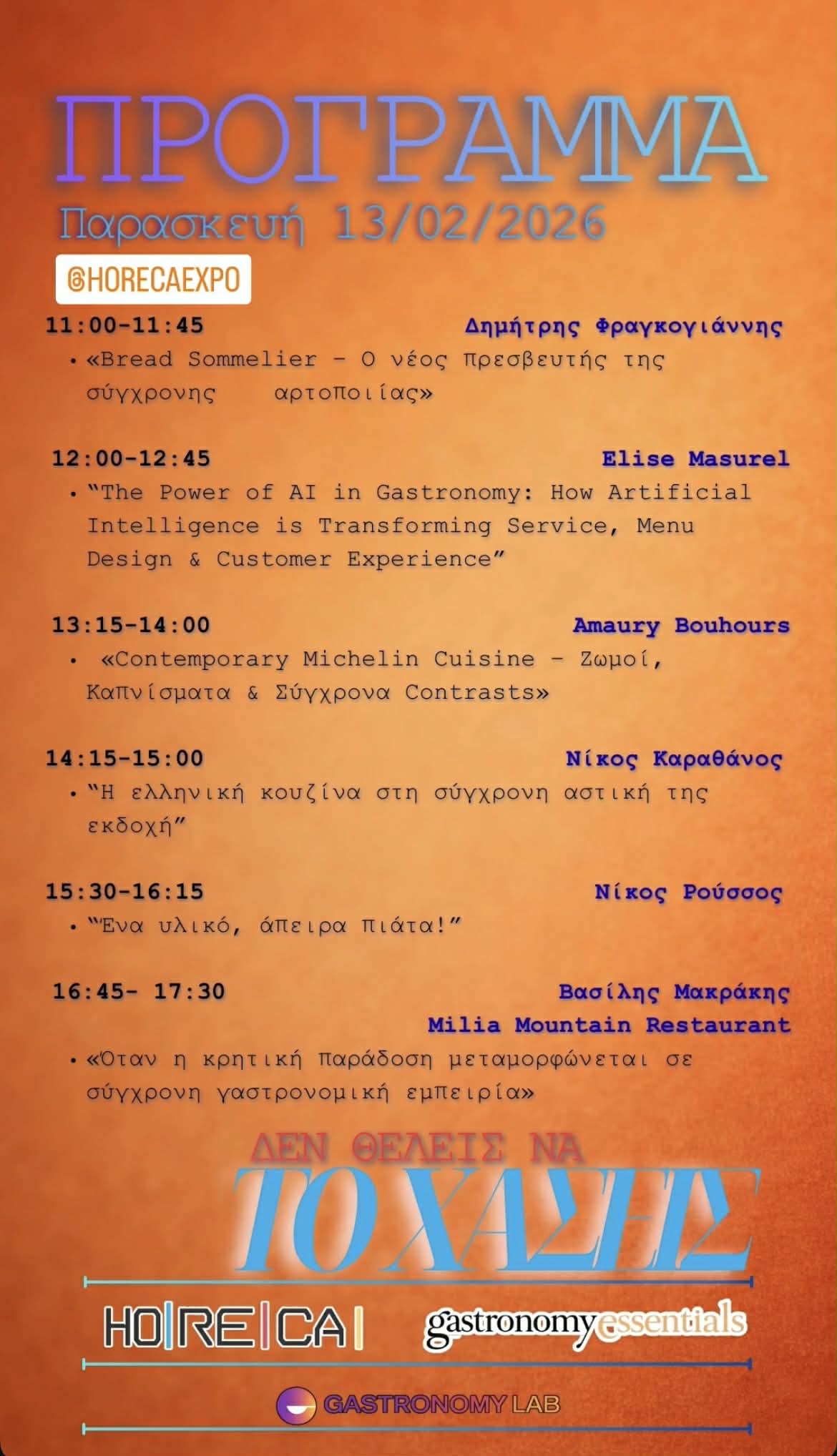
Program for HERACO Athens 2026
Προετοιμαστείτε για κρητική μαγεία στο #HORECA2026! Την Παρασκευή 13/2 (16:45–17:30), ο σεφ Βασίλης Μακράκης από το Milia Restaurant παρουσιάζει «Όταν η κρητική παράδοση μεταμορφώνεται σε σύγχρονη γαστρονομική εμπειρία» στο Gastronomy Lab. Βιώσιμες γεύσεις & καινοτομία – ανυπομονούμε! #ΚρητικήΚουζίνα #Γαστρονομία #Κρήτη
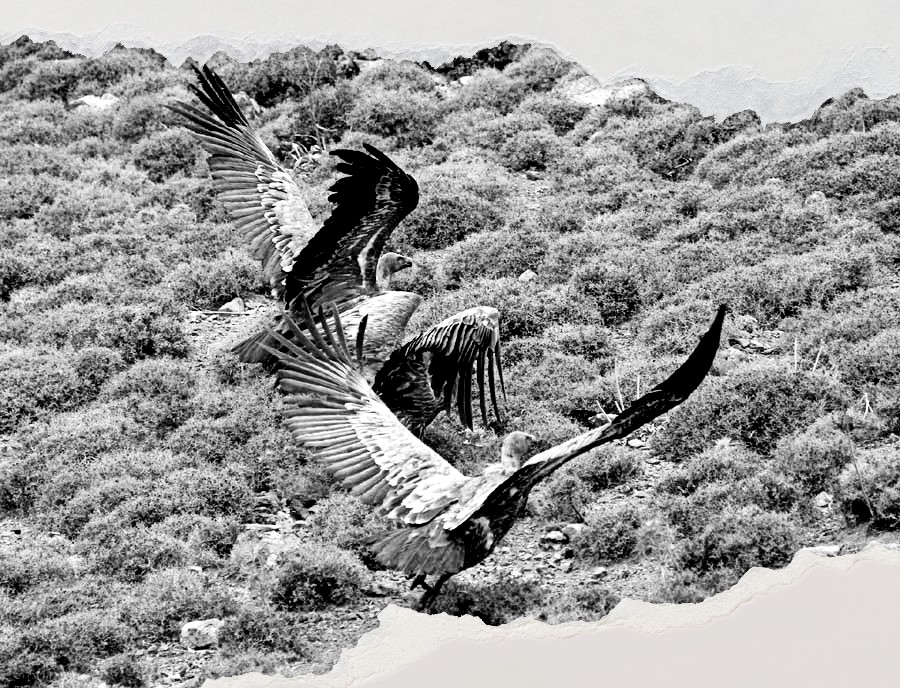
Could well be a movie title equivalent to Dances with wolves? Sure, if this was not the case that the co-owner and restorer of the medieval settlement that became Milia Mountain Retreat (a local “Green Man” in his overwhelming passion for Nature preservation and species protection), Giorgos Makrakis, wouldn’t put it in practice. Committed to practicing absolute recycling of resources, Giorgos often drives to the sloping sides of the mountains around Milia and disposes of organs and bones from dead animals on his farm, in order for the predator birds (vultures) that fly over him throughout his life to have a meal.
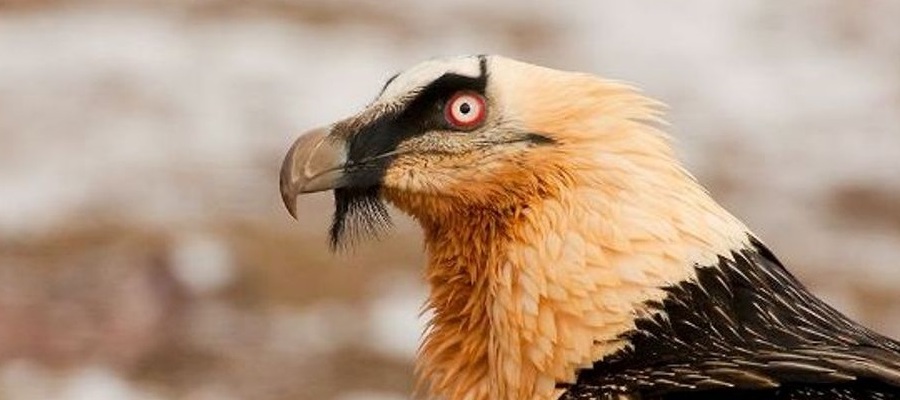
Predator birds in Crete, vultures of two different kinds, the Gypaetus Barbatus and the Gyps Fulvus, are often seen over the sky of Milia, with the second being the most common species. The Gyps vulture has a wingspan of 260cm and a body length of around 97 – 104 cm, slightly smaller than its family, the Gypaetus, with 270 cm wingspan and body length ranging between 102 and 114 cm.
The “Gyps and Co” fly in smaller or larger groups, and their color can be distinguished easily with binoculars; the feathers of the collar are white short for an adult, who has a white-gray head and neck, brown to white-gray plumage. This species is known for only eating dead flesh, which practically means that it can rather cause awe than a threat, as it does not attack anything moving.
The bigger Gypaetus has an off-white head and chest, square wings, black back, and a long tail, is rare in the area and very difficult to reproduce. It is being fed exclusively by bones, thus the remaining part of the others’ meal, which practically means that Nature knows better in terms of recycling.
Unbelievable or adventurous as it may seem, the practice of feeding the vultures is for Giorgos not more important than cleaning an old stone fountain from its dirt, coming up with an owl’s nest, and placing it on a tree where she is seen to frequent, or rushing to unblock a goat’s horns that got trapped at the fence. Preserving natural and cultural elements alike, this persisting local is used to still be keeping old tree trunks found around Milia, wood that was once used for construction and is still strong enough for potential re-use, especially if it comes from amazingly smelling trees, such as cedars.
Don’t take him wrong, though, he will not drive you around for vulture feeding if you happen to visit Milia for a relaxing stay. Nor will he point out where these awe-inspiring birds (the “ornea” in Cretan dialect) frequent for the lunch that he provides them with. By now he knows, they never show up if anybody approaches out of curiosity or to take photos. It is a different deal they have with him, and it is about mutual respect, a kind of intimate relationship, and rare proximity. Thus they approach, yes, but only when he is alone. They even recognize his car.
There are no certain skills required to fall in love with a chestnut tree; she is audacious, classy, and casual at the same time, passively aggressive to enemies, and courageous, at the same time. She is a living miracle.
As you are packing for your winter travel, space, weight and time are to be considered, but not when you are about to enter the chestnut forest of Milia, where space and time vanish. As it happens in every romance, that is worth being named as such.
So if you’re spending your winter vacation around the area of western Crete, get ready for the perfect winter love affair, that follows the hiking and sightseeing parts of your trip; the chestnut tree is your other half.
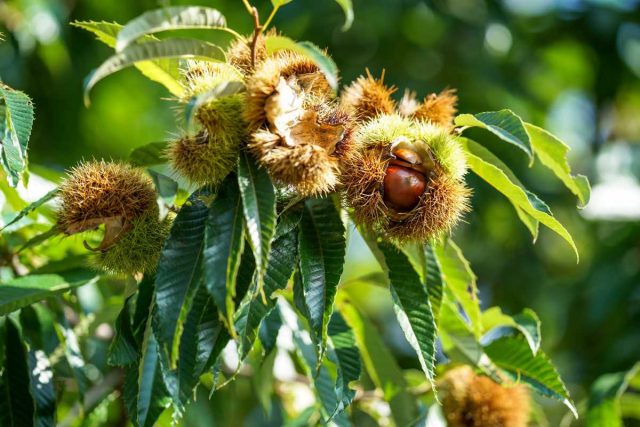
The common chestnut (Castanea sativa) of the northern hemisphere, is widespread in the mountainous areas of western Crete, and gives edible fruits, a product that has long been a source of income to the locals -and to the inhabitants of Milia, as well, since the 16th century. It is a large tree with long leaves, which can reach a height of 30 m, although the average ranges from 12 to 15 m.
What is poetic about her, is the fact that the “male” and “female” flowers are formed on the same plant, but separately, awaiting the proper touch of Nature in order to come together. Sounds like a fairytale, extracted from some previous centuries’ romantic literary genre? That and more, the “male” parts are united in upright florets and appear in July, whereas the “female” ones are born united in groups, at the ends of the branches, inside a spiny sheath. And, at some unexpected moment in late September and early October, we just eat her autumn fruits!
Of the fruit-bearing varieties of this species, the most important are the “Chestnuts of Pelion” (in Central Greece) and the “Chestnuts of Crete”. The climate should be temperate and humid. It withstands the winter cold but needs a warm and sunny location to grow well, bloom, and complete the ripening of its fruits. It is pleasant to be thinking of the chestnut tree as your romantic relationship. You’ll typically need three layers to protect yourself from a winter cold or a bad romance; one to wick, one to insulate, and one to protect. But the chestnut tree is not of the kind. She is tender and comprehensive in her attitude, needs care, however. Are you willing to jeopardize your strong character and your attitude? She, too, has a shelter of spines. Take a lesson out of this relationship, no one is to be hurt if taken care of with respect and…slowly.
Spend a day in the vibrant heart of Chania, where history and modernity collide:
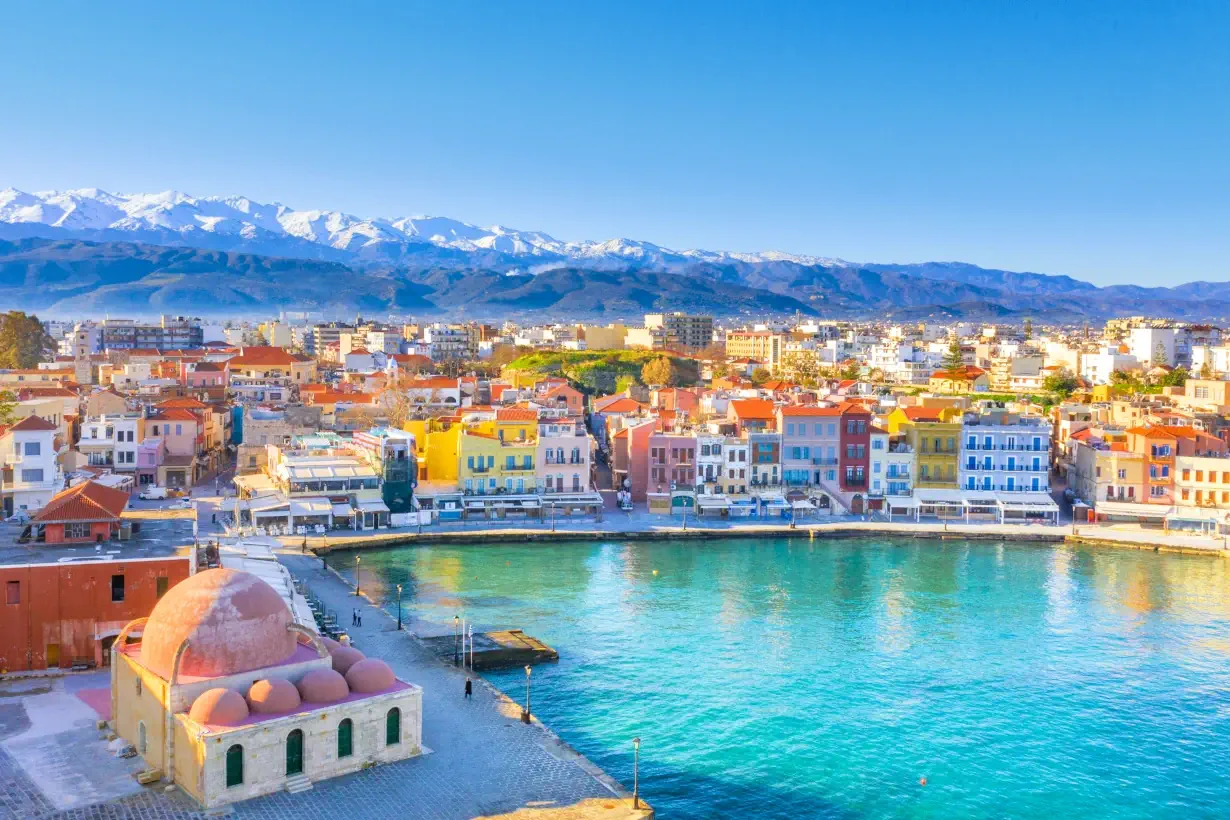
Chania Old Town (1-hour drive): Wander the narrow, cobblestone streets of this Venetian-era town, filled with boutique shops, charming cafes, and historic landmarks. Don’t miss the old harbor, perfect for a romantic evening stroll.
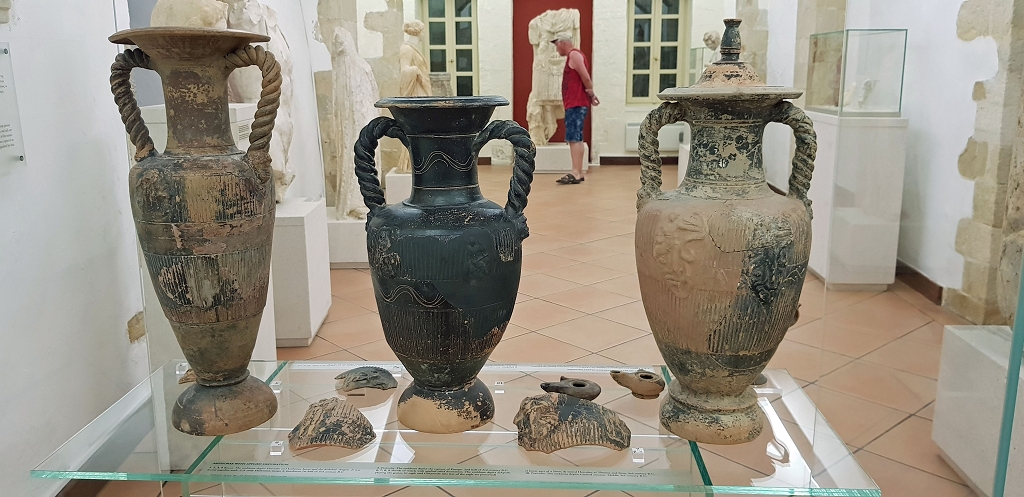
Archaeological Museum of Chania and Venizelos Tomb (1.5-hour drive to Akrotiri): Explore the new Archaeological Museum in Chania, then visit the tomb of Eleftherios Venizelos, Greece’s first modern leader, set on a hill with stunning views of the city.
Waves on the Rock in Ravdoucha (on return, 45-minute drive from HERMITAGE): Stop for a seafood dinner at this cliffside restaurant, where the waves crash below and the sunset paints the sky in hues of gold and pink.
Uncover the ancient history of Crete with these cultural excursions:
Ancient Polyrinia (40-minute drive): Explore the ruins of this ancient acropolis, perched on a hill with commanding views of the sea. Imagine life 3,000 years ago as you wander among Minoan and Roman remnants.
Archaeological Museum of Kastelli (30-minute drive): Discover artifacts spanning 6 million years of Cretan history, from prehistoric tools to Roman mosaics, in this fascinating museum. Alternatively, visit the new Archaeological Museum in Chania (1-hour drive) for an even deeper dive into the island’s past.
Agios Dikeaos in Elos (1-hour drive via dirt road): For an off-road adventure, take your 4×4 to this high-altitude viewpoint at 1,150 meters. The panoramic vistas of the south, west, and north coasts of Crete are worth the rugged journey.
Set sail for two of Crete’s most breathtaking destinations, accessible by boat:
Balos Lagoon and Gramvousa Island (30-minute drive to Kastelli): Rent a private boat or join a group tour from Kastelli to visit the world-famous Balos Lagoon, a turquoise paradise framed by white sands and dramatic cliffs. Continue to Gramvousa Island to explore its historic Venetian fort, offering sweeping views of the coastline.
Gavdos Island (45-minute drive to Paleochora): Catch a ferry from Paleochora to Gavdos, the southernmost point of Europe. This pristine, untouched island offers deserted beaches, rugged landscapes, and a sense of stepping back in time. Pack a picnic and plenty of water, as facilities are minimal.
Journey to the western shores of Crete for a day of sun, sea, and shopping:
Falasarna Beach (1-hour drive): Take the scenic coastal road through charming villages like Kefali, Keramoti, Kampos, Sfinari, and Platanos to reach the golden sands of Falasarna. This beach is perfect for swimming, sunbathing, and watching the sunset over the Mediterranean.
Kapitan Nikolas Taverna (near Falasarna, 45-minute drive from HERMITAGE): Enjoy a seafood feast at this beloved taverna by the old harbor, where the catch of the day is served fresh and flavorful.
Shopping in Kissamos (30-minute drive): On your return, stop in Kissamos Town to browse supermarkets, boutique shops, and local markets for souvenirs, snacks, or supplies.
Experience one of Crete’s most iconic beaches with a day trip to Elafonisi:
Monastery of Chrissoskalitissa (20-minute drive): Start your morning with a visit to this cliffside monastery overlooking the Libyan Sea. The whitewashed walls and panoramic views create a serene atmosphere, steeped in legend.
Elafonisi Beach (25-minute drive): Spend your day on the famous pink sands of Elafonisi, where shallow turquoise waters and a shaded cedar forest at nearby Kedrodassos offer the perfect beach escape. Pack a picnic or rent a sunbed to relax in style.
Elos Village Tavernas (10-minute drive): On your way back to HERMITAGE, stop in Elos for a late lunch or early dinner at one of the village’s cozy tavernas, where you can try local specialties like dakos (Cretan rusks) and lamb stifado.
Discover the charm of Vlatos and its surroundings, perfect for a relaxed day of exploration:
Hike from HERMITAGE: Start your day with a hike directly from the property, wandering through the 11 picturesque neighborhoods of Vlatos Village. Each corner reveals traditional stone houses, olive groves, and stunning mountain views.
Park of Peace (5-minute drive): Embark on a serene hike through this million-square-meter park, filled with majestic trees and panoramic vistas. It’s a perfect spot for nature lovers and photographers.
Topolia Gorge (5-minute drive): Take a scenic 1-hour hike through this dramatic gorge, crossing the river and marveling at towering limestone cliffs. Afterward, enjoy lunch at one of Topolia’s charming tavernas, where you can savor fresh Cretan dishes.
Milia Restaurant (10-minute drive): Indulge in gourmet dining at this award-winning restaurant, led by chef Vasilis Makrakis. Expect innovative dishes made with local, seasonal ingredients in a rustic mountain setting.
Taverna of Michalis Iliakis in Mili (5-minute drive): For a taste of authentic Cretan cuisine, dine at this traditional taverna, known for its hearty, home-cooked meals.
Folklore Museum and Kafeneon in Vlatos: Immerse yourself in local history with a visit to the Vlatos Folklore Museum (call Martin for access). Afterward, relax at the traditional Kafeneon, a local coffee house where you can sip Greek coffee and chat with villagers.
Vlatos Jazz (on-site or nearby): Every Sunday evening, enjoy acoustic music by local and international artists at Vlatos Jazz, paired with delicious local delicacies—a perfect way to end your day.