
Category: Stories from the Heart

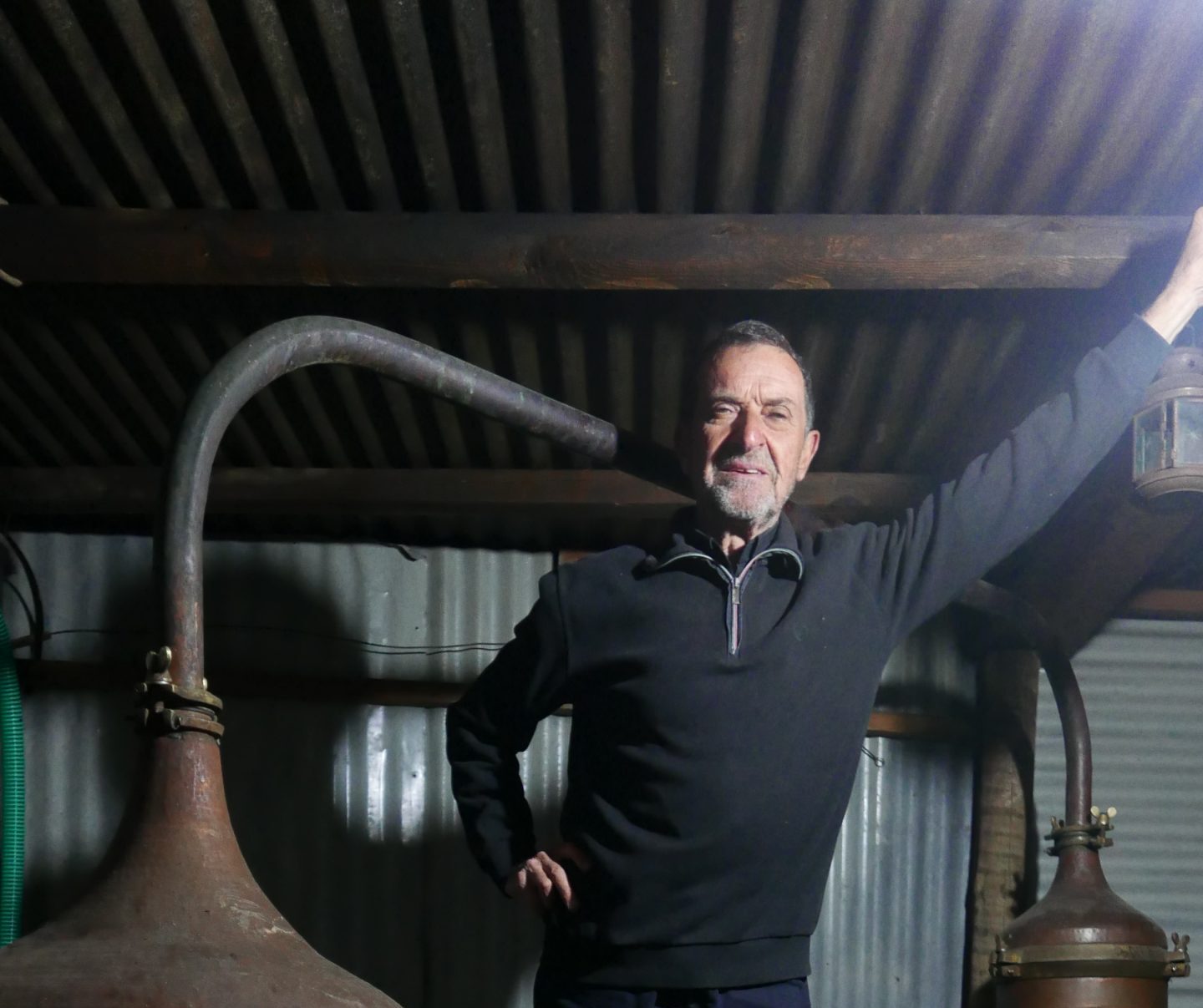
  • The Keeper of Springs and Bells: Pantelis Vaidakis, Heart of Vlatos

    The Keeper of Springs and Bells: Pantelis Vaidakis, Heart of Vlatos

    The story of Pantelis Vaidakis is the story of a man who carries Vlatos in his hands—literally and quietly, like water from the mountain springs he has tended for decades.Born and raised in the narrow stone lanes of Vlatos, under the watchful gaze of the same chestnut-covered slopes that still shade the village today, Pantelis learned early that home is not something you leave lightly. He went to the old schoolhouse (now the Folklore Museum), where the lessons were as much about the land as about books: how to respect the earth, honor the church bells, and keep the community whole. As a young man, the call of the wider world pulled him away—he sailed on Greek merchant vessels, crossing oceans, weathering storms, seeing ports from Singapore to Rotterdam. Those years taught him the rhythm of the sea, but also sharpened his appreciation for the stillness of home. When he returned to Vlatos, he brought back not just stories, but skills: the steady hand that operates heavy machinery—bulldozers, diggers, excavators—tools he would later turn toward the village’s quiet needs.

    Pantelis raised three fine sons—Giannis, George, and Kostas—with his lovely wife Johanna in the heart of Vlatos. Their home is filled with the sounds of family life: laughter in the garden, the clink of tools, the low hum of bees among the vines. Together they work the land—gardens bursting with tomatoes, herbs, and greens; vineyards that yield grapes for homemade wine; ancient olive trees that drop their fruit like quiet blessings each autumn. It is a life of seasons, not schedules: pruning in winter, harvesting in fall, sharing raki with neighbors when the work is done.

    Proud and deeply religious, Pantelis serves as the caretaker of Vlatos’ churches—the small stone chapels that dot the village and hillsides, their bells ringing out over the valleys. He keeps the candles lit, the icons dusted, the doors open for prayer and for anyone seeking shelter from the wind. Faith for him is practical: it lives in the daily tending, in the quiet maintenance of sacred spaces that have stood for generations.

    When Vlatos became part of the larger municipality of Kastelli, the role of mayor shifted to an honorary one, a position of respect rather than administration. Pantelis holds it now with the same steady pride he brings to everything else. He is the village’s living memory, its gentle authority—the man people turn to for counsel on matters large and small.

    Perhaps his most enduring work is invisible to most visitors: the water infrastructure that brings life from the mountain springs down to every house, every field, every thirsty olive root. For years Pantelis has maintained these channels—clearing blockages, repairing stone aqueducts, ensuring the flow never stops even in dry summers. It is labor few notice until the taps run dry; then they remember who keeps the water coming. In a place where water means survival, this quiet guardianship is a form of devotion.

    To Martin Vlatos, Pantelis is best man and steadfast friend. When Martin married Johanna in 2021 under the open Cretan sky, Pantelis stood as witness alongside George Makrakis—two pillars of the village flanking the couple in a ceremony that felt like the mountain itself giving its blessing. That bond runs deep: shared raki at dusk, shared labors, shared love for this small corner of Crete.

    Pantelis does not seek the spotlight. He is content with the rhythm of his days: rising before dawn to check the springs, tending the vines, ringing the church bell at vespers, gathering with family and friends around a table laden with what the land provides. He embodies the unsung heroism of rural Crete—the man who stays, who mends, who preserves so others can arrive and feel welcomed into something timeless.

    Walk through Vlatos on a February morning in 2026, with mist still clinging to the chestnut groves and the air crisp with promise of spring. You might see Pantelis in his garden, hoe in hand, or hear the faint trickle of water he has kept running for decades. He will greet you with a nod and a smile, perhaps offer a glass of his wine or a handful of olives. In that simple gesture lies the essence of Vlatos: hospitality rooted in quiet strength, faith in the land, and a life lived fully in service to place and people.

    Pantelis Vaidakis doesn’t speak much of legacy. He simply lives it—one repaired pipe, one tended vine, one church candle at a time. The village endures because men like him never truly leave; they become part of the mountain itself.If you come to Vlatos, listen for the bells he rings, taste the water he guards, feel the peace he helps sustain. Here is a hero who needs no cape—only calloused hands, a faithful heart, and the unchanging horizon of home.Welcome. The springs are still flowing. 
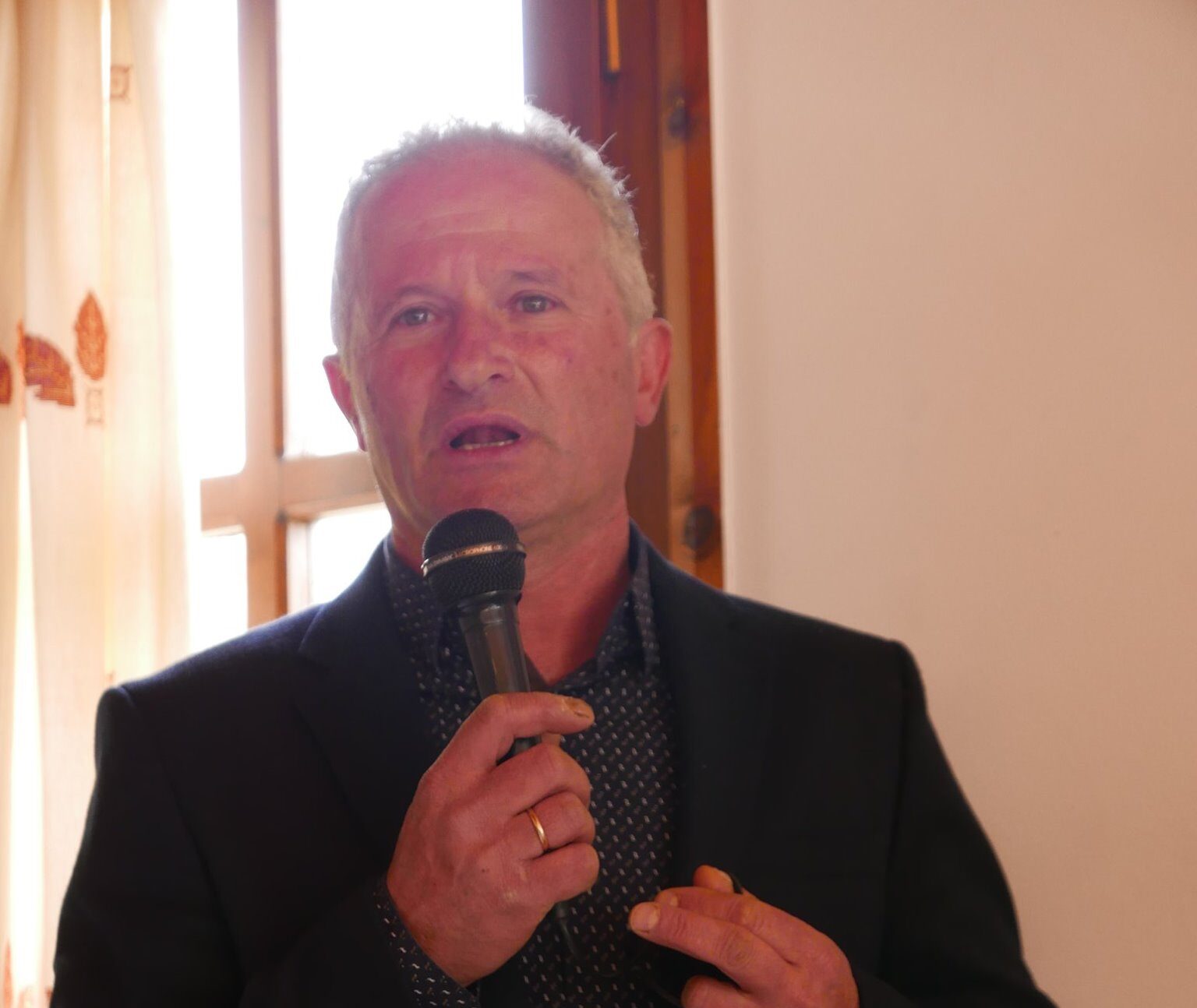
  • The Builder of Milia: George’s Unyielding Hands and Heart for Vlatos

    The Builder of Milia: George’s Unyielding Hands and Heart for Vlatos

    The story of George Makrakis is the story of a man who never left his mountain—and in staying, he helped the mountain itself come back to life.Born and raised in the stone embrace of Vlatos, under the same thyme-scented sky that still greets dawn with goat bells and distant sea whispers, George grew up surrounded by loving parents who taught him the quiet religion of hard work and reverence for the land. In the old village schoolhouse—now the Folklore Museum—he first met Kostas Koukourakis, a friendship that would one day grow into shared battles for the soul of Innachorio, the wider Kissamos region. Even as boys, they sensed the place held something sacred: not just earth and stone, but a way of living in harmony with both.

    George became a builder in every sense. A strong believer in sustainable economy long before the term became fashionable, he poured his muscle, faith, and unyielding energy into reviving what others had forgotten. In the early 1980s, he met Jacob Tsourounakis (Iakovos), the visionary who dreamed of breathing life back into Milia—a 16th-century mountain settlement abandoned mid-20th century, its stone houses crumbling into the forest. Jacob brought the brains and the bold idea: restore the ruins, reforest the slopes, cultivate organically, create a small stock-farming unit, and open it to travelers who sought authentic connection with nature. George brought the hands—the relentless labor, the day-after-day grit of hauling stone, planting chestnut and pine, rebuilding walls by hand. Together they turned “kouzoulada” (Cretan madness) into miracle. After twelve years of exhaustive restoration, Milia Mountain Retreat opened in the early 1990s as one of the world’s first true eco-lodges. National Geographic named it a top ecolodge in 1998, praising it for family adventures, local culture, and environmental sensitivity in Western Crete’s mountainous heart. That reputation—earned through solar power, no electricity grid, organic gardens, and rooms faithful to Cretan mountain architecture—owes its strength to George’s tireless work. He was the muscle that made the dream stand.

    He raised a beautiful family in Vlatos with his wife Artemis: three sons, Vasilis, Vangelis, and Rafail. Today, Vasilis carries the flame forward as chef of the Milia Restaurant, a rising star in Greece’s culinary scene, blending mountain herbs, local cheeses, and wild greens into dishes that taste like the land itself.George’s devotion never stopped at Milia. A deeply religious man, he held many roles in Vlatos’ Cultural Society “New Horizons,” quietly serving as guardian of tradition—tending the museum, supporting festivals, keeping the village’s heartbeat steady. He fought alongside the old mayor of Kastelli, Mr. Koukourakis (his schoolmate Kostas), for the sustainability of Innachorio: protecting gorges, forests, water sources, and the slow rhythm of rural life against hasty development. His belief was simple and fierce: the land gives if you give back.

    Today, as vice-mayor of Kastelli (the municipal seat encompassing Kissamos and Vlatos), George oversees Tourism and Culture. He shapes policies that honor Crete’s heritage while inviting respectful visitors—always with an eye on balance, never exploitation.

    To Martin Vlatos, George is more than friend or collaborator: he is best man, brother in spirit. When Martin arrived seeking quiet, George handed him the keys—not just to doors, but to possibility. He opened the 150-year-old stone church for those first unplugged acoustic evenings, and the old schoolhouse for ideas that would grow into the Vlatos Jazz Festival. In that act of trust, he planted the seed for music under candlelight, for strangers becoming family in a sacred space no bigger than fifty souls.

    George Makrakis doesn’t speak of heroism. He lives it: in the calloused hands that rebuilt Milia, in the faith that guides his days, in the steady voice that still fights for the mountain’s future. He is the quiet force behind Vlatos’ peace—the man who stayed, worked, believed, and in doing so, kept an entire corner of Crete green, alive, and welcoming.If you walk the trails to Milia or sit in the church during a jazz set, you feel his presence: in the restored stones underfoot, in the organic meal on your plate, in the way the village still breathes easy. He built not for glory, but for tomorrow. And tomorrow, thanks to him, still looks a lot like yesterday—beautiful, rooted, sustainable.Welcome to his world. The mountain thanks him every day.

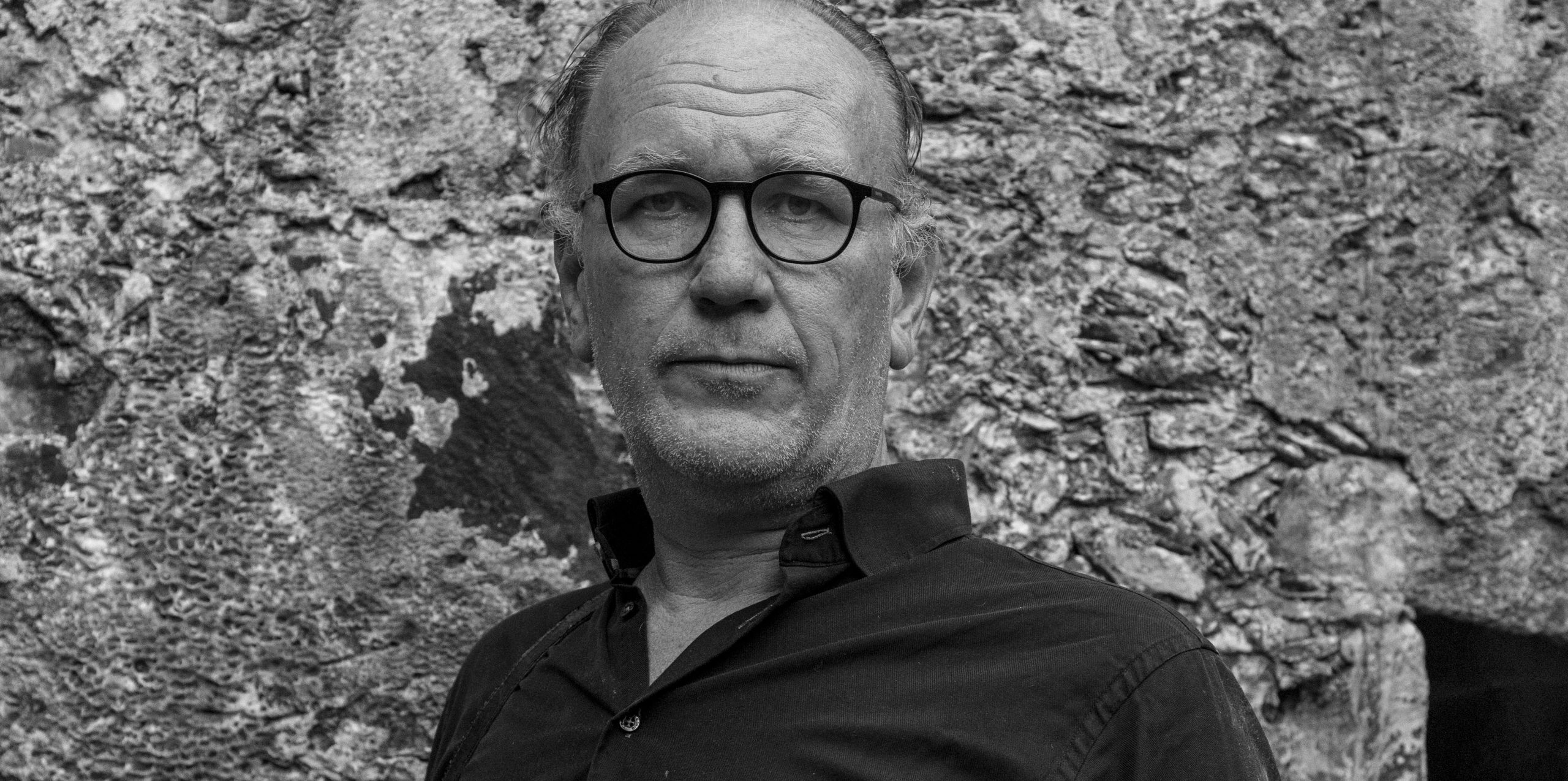
  • From Dutch Canals to Cretan Olives: Martin’s Quiet Journey Home

    From Dutch Canals to Cretan Olives: Martin’s Quiet Journey Home

    The story of Martin in Vlatos is one of those quiet, unfolding journeys that the mountains seem to wait for—patient, without hurry, until the right soul arrives and recognizes home.Born in the flat, watery landscapes of Alphen aan den Rijn in the Netherlands, Martin grew up surrounded by the ordered rhythm of Dutch life: canals, bicycles, precise horizons. He trained in graphic design and audiovisual arts, skills that soon carried him into the world of IT—building digital bridges for big businesses, state offices, local governments. Screens, deadlines, the steady hum of servers. It was meaningful work, yet something in him kept listening for a different sound, one that didn’t echo in conference rooms.That sound found him in 1996.

    He first stepped into the Cretan mountains seeking silence, and the path led him to Milia—a restored 16th-century settlement clinging to the hillside like a memory the forest refused to forget. Milia was still raw then, just awakening from decades of abandonment. Martin felt the pull immediately: the scent of resin-warmed pine, the low murmur of wind through chestnut leaves, fires crackling in stone hearths at night. He returned every winter for a month, suitcase in hand, to read by the fire, let books and woodsmoke fill the long evenings. Time slowed here in a way it never had back home. The world outside grew distant; the mountain held him gently.

    In those quiet seasons he helped bring Milia into the digital age—registering their domain and crafting the first website in 1997. It was a small act, but it felt like planting a seed in fertile earth.

    Life, though, has its own seasons. In 2009 Martin married a doctor from nearby Elos. They hoped to root together in this land of olive and stone, but the marriage, tender at first, could not weather the deeper differences. Four years later they parted with respect and sadness.

    Rather than leave Crete, Martin chose to stay. The island had already claimed a piece of his heart; he would not uproot it again.He found a piece of land above Vlatos—steep, sun-drenched, cradled by ancient olive trees of the rare Tsunata variety. Those trees, with their silver-green leaves whispering in the breeze, became his companions. He began to tend them, learning their language of root and fruit. From their harvest came Tsunata olive oil, golden and fragrant, a quiet testament to patience and care.In 2016 the village itself called louder. Vlatos—small, unassuming, wrapped in thyme-scented hills—needed a voice online. Martin built vlatos.gr from the ground up, pouring into it the same devotion he gave the olives.

    Year after year he has tended the site like a garden: updating pages with the rhythm of the seasons, sharing stories of the Park of Peace, the Folklore Museum in the old schoolhouse, the candlelit hush of the jazz evenings. The website became a window through which the world could glimpse this place of peace.

    And then, in the way the Cretan mountains often arrange such things, love returned.In 2021 Martin married Johanna, a beautiful Dutch woman whose warmth matched the sun on stone. They said their vows surrounded by the village that had become family. George Makrakis, then president of the Cultural Society “New Horizons,” and Pantelis Vaidakis stood as witnesses—two men whose lives had long been woven into Vlatos’ heartbeat. Under the open sky, with goat bells drifting from distant slopes, the ceremony felt less like a wedding and more like a homecoming for everyone present.Through all these years, Martin’s deepest collaboration has been with the soul of the village itself.

    Together with George Makrakis and the world-renowned violinist Maria Manousaki—born in South Africa, shaped by New York stages and Cretan roots—he helped birth the Vlatos Jazz Festival. What began as an intimate dream has grown into Season 9 in 2026: unplugged acoustic sets every Sunday in the 150-year-old stone church, candles flickering, mountain air carrying each note like a prayer. Maria’s curation brings global voices into this tiny sacred space; George’s steady leadership and the volunteers of “New Horizons” make it possible; Martin ensures the story reaches beyond the hills.

    The Hermitage Villa rose on his land as the natural next chapter—an off-grid eco-haven with its private infinity pool gazing over olive groves and distant sea. Solar-powered, simple in its luxury, it offers guests the same gift Martin once found in Milia: solitude that is never lonely, because the mountain listens back.

    Today, as February’s crisp air carries the promise of spring, Martin walks the paths he helped shape. He tends the Tsunata trees, updates vlatos.gr with fresh images of the coming festival, shares raki and stories with neighbors. Johanna is beside him, their life together a quiet harmony.

    He never set out to become a founder, an organizer, a guardian of this place. He simply arrived one winter, listened, and stayed. In doing so, he became part of Vlatos’ own quiet heroism—the kind that doesn’t shout, but endures, plants seeds, tends fires, and welcomes the next wanderer who needs to slow down and remember what home feels like.If you come to Vlatos, you may meet Martin on a trail or see his name on the website that first drew you here. More likely, though, you’ll simply feel his presence: in the flicker of candles during a jazz set, in the golden pour of Tsunata oil on village bread, in the way time slows until your own heart can catch up.Welcome. The mountain has been waiting.