

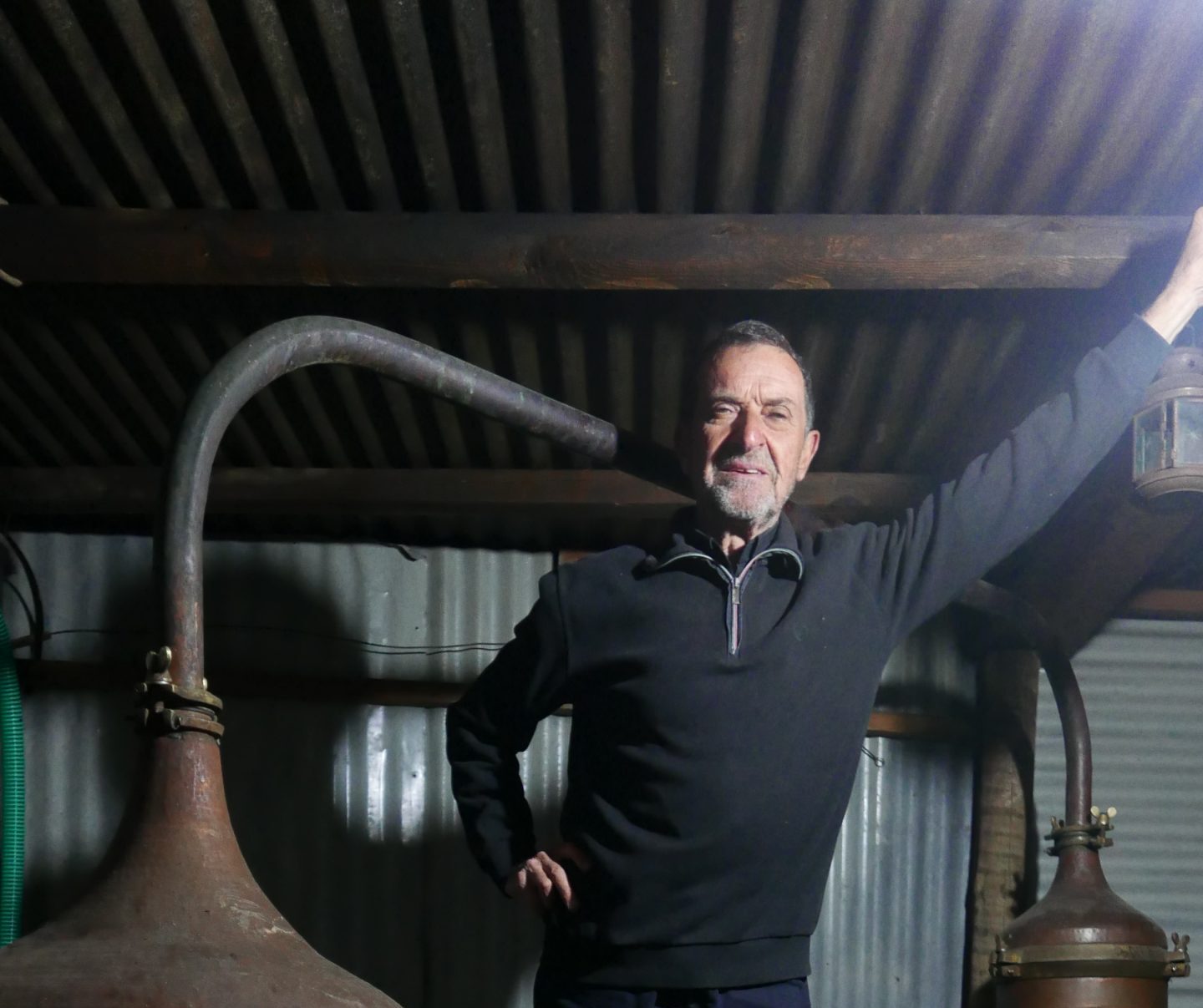
The story of Pantelis Vaidakis is the story of a man who carries Vlatos in his hands—literally and quietly, like water from the mountain springs he has tended for decades.Born and raised in the narrow stone lanes of Vlatos, under the watchful gaze of the same chestnut-covered slopes that still shade the village today, Pantelis learned early that home is not something you leave lightly. He went to the old schoolhouse (now the Folklore Museum), where the lessons were as much about the land as about books: how to respect the earth, honor the church bells, and keep the community whole. As a young man, the call of the wider world pulled him away—he sailed on Greek merchant vessels, crossing oceans, weathering storms, seeing ports from Singapore to Rotterdam. Those years taught him the rhythm of the sea, but also sharpened his appreciation for the stillness of home. When he returned to Vlatos, he brought back not just stories, but skills: the steady hand that operates heavy machinery—bulldozers, diggers, excavators—tools he would later turn toward the village’s quiet needs.
Pantelis raised three fine sons—Giannis, George, and Kostas—with his lovely wife Johanna in the heart of Vlatos. Their home is filled with the sounds of family life: laughter in the garden, the clink of tools, the low hum of bees among the vines. Together they work the land—gardens bursting with tomatoes, herbs, and greens; vineyards that yield grapes for homemade wine; ancient olive trees that drop their fruit like quiet blessings each autumn. It is a life of seasons, not schedules: pruning in winter, harvesting in fall, sharing raki with neighbors when the work is done.
Proud and deeply religious, Pantelis serves as the caretaker of Vlatos’ churches—the small stone chapels that dot the village and hillsides, their bells ringing out over the valleys. He keeps the candles lit, the icons dusted, the doors open for prayer and for anyone seeking shelter from the wind. Faith for him is practical: it lives in the daily tending, in the quiet maintenance of sacred spaces that have stood for generations.
When Vlatos became part of the larger municipality of Kastelli, the role of mayor shifted to an honorary one, a position of respect rather than administration. Pantelis holds it now with the same steady pride he brings to everything else. He is the village’s living memory, its gentle authority—the man people turn to for counsel on matters large and small.
Perhaps his most enduring work is invisible to most visitors: the water infrastructure that brings life from the mountain springs down to every house, every field, every thirsty olive root. For years Pantelis has maintained these channels—clearing blockages, repairing stone aqueducts, ensuring the flow never stops even in dry summers. It is labor few notice until the taps run dry; then they remember who keeps the water coming. In a place where water means survival, this quiet guardianship is a form of devotion.
To Martin Vlatos, Pantelis is best man and steadfast friend. When Martin married Johanna in 2021 under the open Cretan sky, Pantelis stood as witness alongside George Makrakis—two pillars of the village flanking the couple in a ceremony that felt like the mountain itself giving its blessing. That bond runs deep: shared raki at dusk, shared labors, shared love for this small corner of Crete.
Pantelis does not seek the spotlight. He is content with the rhythm of his days: rising before dawn to check the springs, tending the vines, ringing the church bell at vespers, gathering with family and friends around a table laden with what the land provides. He embodies the unsung heroism of rural Crete—the man who stays, who mends, who preserves so others can arrive and feel welcomed into something timeless.
Walk through Vlatos on a February morning in 2026, with mist still clinging to the chestnut groves and the air crisp with promise of spring. You might see Pantelis in his garden, hoe in hand, or hear the faint trickle of water he has kept running for decades. He will greet you with a nod and a smile, perhaps offer a glass of his wine or a handful of olives. In that simple gesture lies the essence of Vlatos: hospitality rooted in quiet strength, faith in the land, and a life lived fully in service to place and people.
Pantelis Vaidakis doesn’t speak much of legacy. He simply lives it—one repaired pipe, one tended vine, one church candle at a time. The village endures because men like him never truly leave; they become part of the mountain itself.If you come to Vlatos, listen for the bells he rings, taste the water he guards, feel the peace he helps sustain. Here is a hero who needs no cape—only calloused hands, a faithful heart, and the unchanging horizon of home.Welcome. The springs are still flowing.

