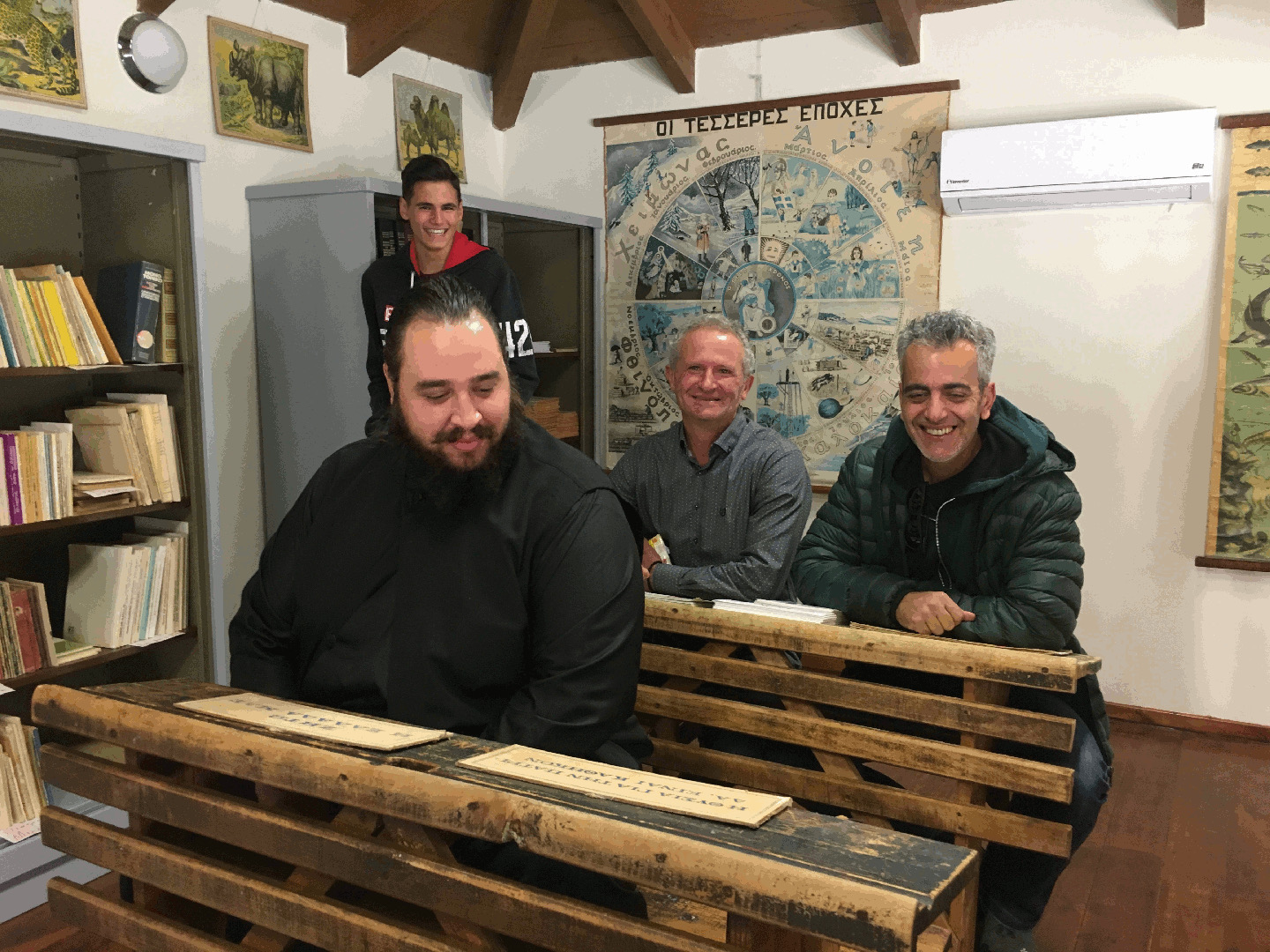
guided private museum tours
The museum is open for reservations only. Your guide is a warm, knowledgeable local deeply rooted in Vlatos and the wider Kissamos region. They speak fluent Dutch, English, Greek, and German and love sharing authentic stories about village traditions, the artifacts, the old school days, and the spirit of the “Village of Peace and Culture”.
A Journey Through Crete’s Folklore and History
Nestled in the heart of Vlatos, a tranquil village in western Crete’s Kissamos region, the Vlatos Village Museum offers a captivating glimpse into the island’s rich cultural tapestry. Housed in the village’s historic old schoolhouse, this small yet evocative museum showcases millennia of folklore craftsmanship, from Neolithic tools to Ottoman-era textiles, celebrating the enduring traditions of rural Crete. Perfect for history buffs and curious travelers, it’s a window into Vlatos’s pastoral soul, set against the backdrop of olive groves and the White Mountains. Below, explore its unique old school setting and the remarkable display of artifacts spanning thousands of years.
What they say about us


Except for concerts or musical events on certain evenings.

Thousand-year-old plane trees tell the story of the island’s past.
The museum is housed inside the elementary school, and visitors can admire old school desks and work tools from the past.
But the most evocative aspect is the surrounding area.





Guided Museum Tours – Vlatos Village Folklore & Old Schoolhouse
Tour Details
- Duration: 60 minutes
- Group size: Up to 10 people (private or small group)
- Price: €25 per group (total, not per person)
- Times: Daily between 11:00 and 15:00 (start times on the hour)
- Language: Guide speaks fluent Dutch (NL), English (EN), Greek (GR), and German (DE)
- Meeting point: Entrance of the Vlatos Village Museum (old schoolhouse) – exact address & Google Maps pin on booking confirmation
Your Guide
Your guide is a warm, knowledgeable local deeply rooted in Vlatos and the wider Kissamos region. They speak fluent Dutch, English, Greek, and German and love sharing authentic stories about village traditions, the artifacts, the old school days, and the spirit of the “Village of Peace and Culture”. Every tour feels personal—like visiting a neighbor who happens to have a museum in their house.


The Old School Setting: A Historic Backdrop
The Vlatos Village Museum is located in the village’s former schoolhouse, a stone-built structure from the late 19th century that exudes rustic charm. This single-story building, with its thick walls and tiled roof, was once the educational heart of Vlatos, serving generations of children until the mid-20th century. Repurposed by the Vlatos Cultural Association, the schoolhouse retains its nostalgic atmosphere—think wooden beams, whitewashed walls, and creaky floors that echo a bygone era. Its compact rooms, once filled with desks and chalkboards, now house carefully curated exhibits, creating an intimate setting that feels like stepping into a living history lesson.
- Ambiance and Layout: The museum’s layout is simple, with a few rooms organized to guide visitors through Crete’s timeline. Natural light floods through small windows, illuminating displays of handcrafted tools, textiles, and ceramics. The school’s original features, like stone arches and a small courtyard, add authenticity, while informational plaques (in Greek and English) provide context. The setting fosters a reflective mood, perfect for soaking in Vlatos’s heritage.
- Community Role: Maintained by locals, the museum doubles as a cultural hub, often hosting events like talks or craft workshops during festivals (e.g., the Chestnut Festival in October). Its proximity to the 1,700-year-old plane tree and the village kafeneon makes it a natural stop on a Vlatos stroll.
Display of Folklore Craftsmanship: Millennia of Cretan Heritage
The museum’s collection, though modest in size, spans an impressive timeline—from Neolithic (circa 7000 BCE) to Byzantine, Venetian, Ottoman, and modern periods—showcasing the craftsmanship that defined Cretan village life. Artifacts, donated or unearthed locally, reflect Vlatos’s agricultural and pastoral roots, emphasizing self-sufficiency and ingenuity. The exhibits highlight how locals crafted tools, textiles, and household items, preserving traditions through wars, occupations, and modernization.
- Neolithic to Bronze Age (7000–1200 BCE): The collection includes stone tools, such as flint blades and grinding stones, likely sourced from nearby caves or archaeological sites like Polirinia (20km away). These artifacts reveal early farming practices in the fertile Kissamos region, with pottery shards showing Minoan-inspired patterns—think simple geometric designs that hint at Crete’s ancient civilization.
- Byzantine and Venetian Eras (330–1669 CE): Displays feature religious relics, like small icons and olive oil lamps from Vlatos’s Byzantine churches (e.g., the 19th-century church now used as the Vlatos Music Hall). Venetian-era weaving tools, including wooden looms, showcase the intricate embroidery still seen in Cretan dowries. A standout is a hand-carved olive wood spindle, symbolizing the region’s olive oil legacy.
- Ottoman and Early Modern Periods (1669–1900s): The museum shines with Ottoman-era textiles, such as handwoven kilims and embroidered linens, dyed with natural pigments like madder root or walnut. Household items, like copper coffee pots for brewing elliniko (Greek coffee) and clay tsikoudia jugs, reflect daily life. Farming tools—sickles, threshing boards, and donkey saddles—illustrate Vlatos’s agricultural backbone, tied to olive and chestnut harvests.
- Folklore Craftsmanship Highlights:
- Textiles and Weaving: Vibrant blankets and rugs, woven by village women, display patterns passed down for centuries. Some feature symbolic motifs, like fertility or protection symbols, still used in local weddings.
- Pottery and Ceramics: Jars and plates, often unglazed for practical use, show off Cretan simplicity. Look for pithoi (large storage jars) echoing Minoan designs.
- Agricultural Tools: Hand-forged sickles and olive presses underscore the labor-intensive harvests that sustain Vlatos, with some tools still in use during October’s olive season.
- Religious Artifacts: Small crosses, prayer beads, and icons from local chapels connect to Vlatos’s panygiria (saint’s day feasts), like Agios Georgios (April 23).
Why Visit the Vlatos Museum?
The Vlatos Village Museum is a love letter to Crete’s rural heritage, offering a tangible connection to the island’s past in an intimate, unpolished setting. Unlike larger museums in Chania (65km away) or Heraklion (235km), its focus on local craftsmanship—rooted in Vlatos’s fields and hearths—feels deeply personal. Visitors can trace how Neolithic tools evolved into Venetian looms and modern raki stills, all while standing in a schoolhouse where locals once learned. The museum’s authenticity lies in its community-driven curation, with artifacts often accompanied by oral histories shared by volunteers.
- Practical Details:
- Location: Vlatos village center, near Ta Platania taverna and the plane tree at the old school, just past the Kafeneon.
- Hours: Open all seasons, every day from 11:00 to 15:00, Reservation tickets only. Call Martin Vlatos (+30 6984899530), the curator of the museum for more information..
- Admission: €25 for a group of maximal 10 history buffs (reservations only). For larger groups contact Martin Vlatos.
- Tips: Combine with a coffee at the nearby kafeneon or a hike in the Park of Peace (2 trails, 4-6km) or a nice lunch in Milia Restaurant. Guided tours are rare but can be arranged via the association for groups.
- Events Tie-In: Visit during the Chestnut Festival (late October) or tsikoudia distillation season to see live craft demos, like weaving or raki-making, often set up near the museum.
This hidden gem, just 25km from Kissamos and 6km from Elos, invites you to slow down and savor Crete’s timeless craftsmanship. For more details, check vlatos.gr or local X posts for seasonal updates.
Location of the Vlatos Museum
News about Museum Vlatos over the years
- Η ΕΡΤ1 στο Βλάτος
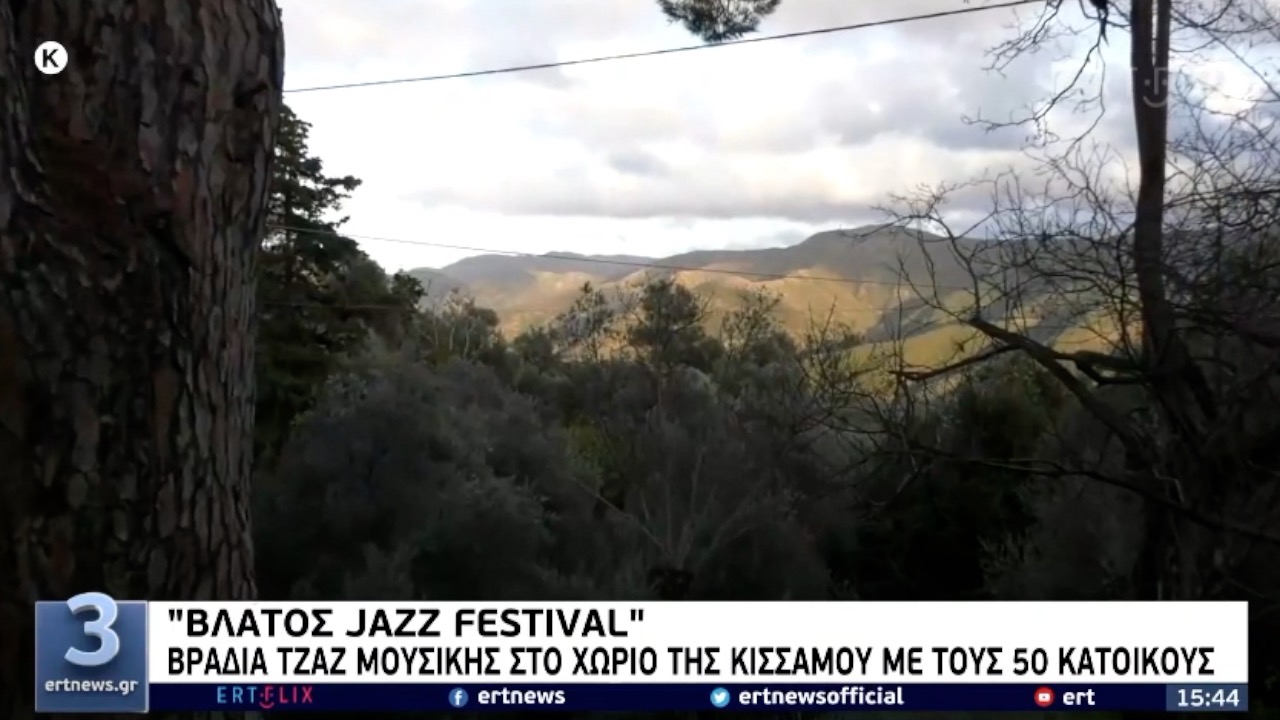 Ένα υπέροχο video-αφιέρωμα Στις 11 Δεκεμβρίου το Βλάτος είχε την τιμή να φιλοξενήσει την Κατερίνα Πολύζου, ρεπόρτερ της ΕΡΤ1, που παρουσίασε το αφιέρωμα του κρατικού τηλεοπτικού σταθμού για το Βλάτος, το λαογραφικό μουσείο μας και το Φεστιβάλ Vlatos Jazz. Το video-αφιέρωμα υπογραμμίζει… Read more: Η ΕΡΤ1 στο Βλάτος
 - ΕΞΩΡΑΙΣΤΙΚΟΣ ΚΑΙ ΕΚΠΟΛΙΤΙΣΤΙΚΟΣ
 ΣΥΛΟΓΟΣ ΒΛΑΤΟΥΣ «ΝΕΟΙ ΟΡΙΖΟΝΤΕΣ» ΑΝΑΚΟΙΝΩΣΗ Στις 8 Σεπτεμβρίου διεξήχθησαν αρχαιρεσίες του Συλλόγου για την ανάδειξη νέου Δ.Σ. από τις οποίες εξελέγησαν οι: Μακράκης Γεώργιος Δερουκάκης Γεώργιος Μακράκης Ραφαήλ Παπουτσάκης Ανδρέας Λιτσαρδάκης Μάρκος Βαϊδάκης Κων/νος αναπληρωματικό μέλος Στην κατανομή αξιωμάτων που έγινε στις… Read more: ΕΞΩΡΑΙΣΤΙΚΟΣ ΚΑΙ ΕΚΠΟΛΙΤΙΣΤΙΚΟΣ
 - Βλάτος Jazz Παγκόσμιο Μουσικό Φεστιβάλ Πρόγραμμα 2020
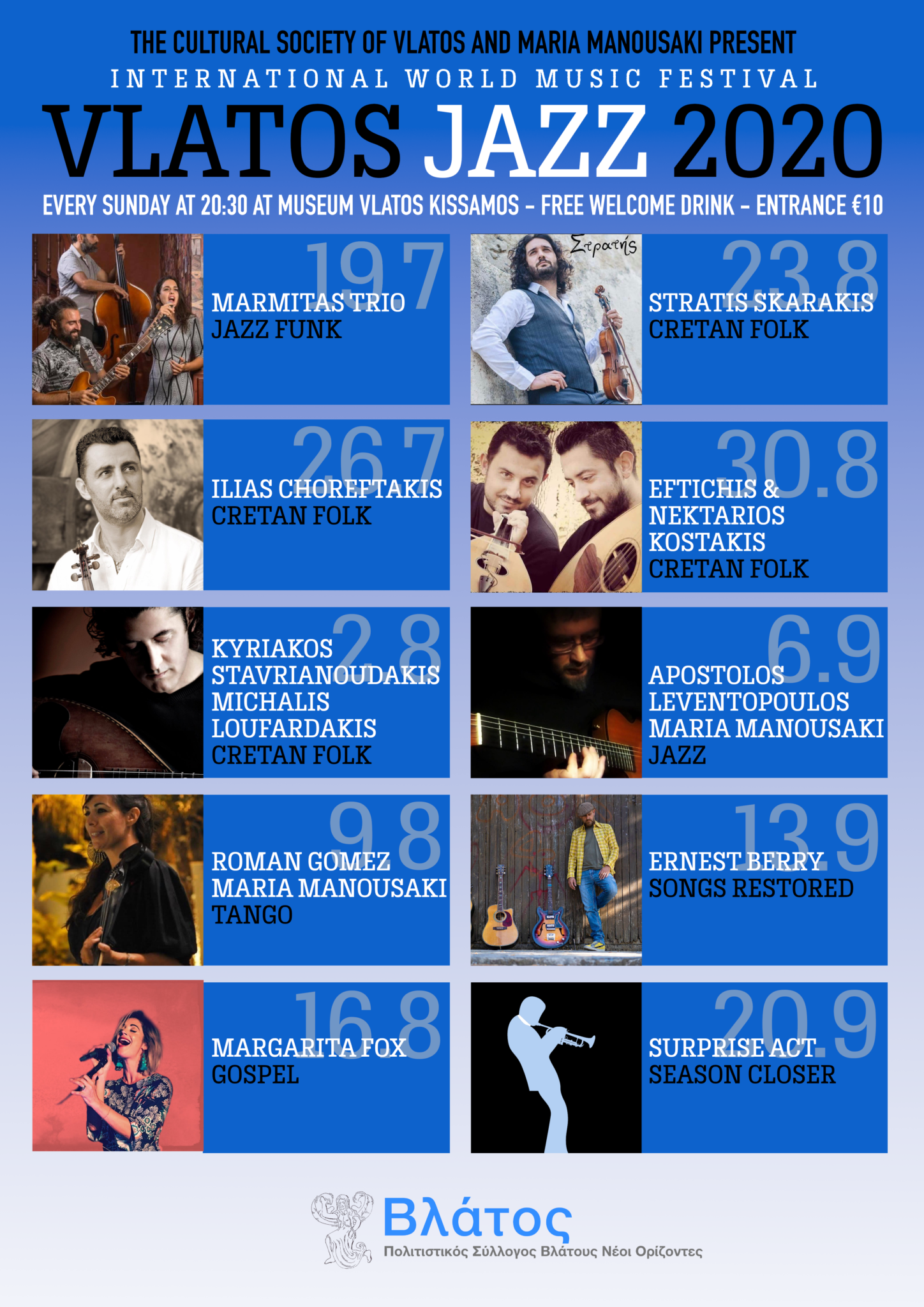 Vlatos Jazz 2020 – Αυτό είναι το πρόγραμμα για το Vlatos Jazz φέτος. Περιέχει ένα μείγμα τοπικών και διεθνών ταλέντων που θα εμφανιστεί στην παλιά εκκλησία πίσω από το μουσείο.
 - Σχολική εκδρομή στο Λαογραφικό Μουσείο Βλάτους
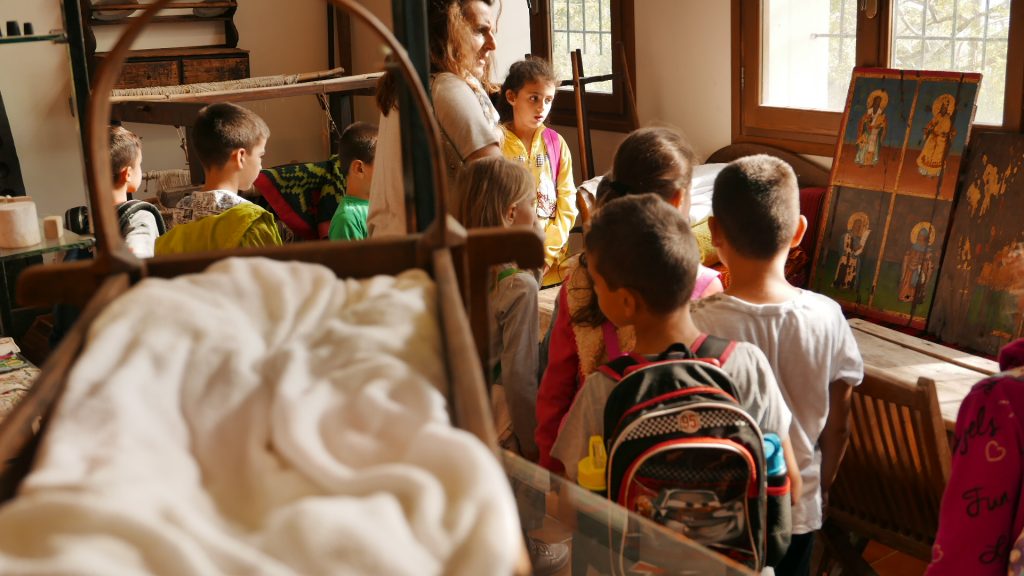 Πρόσφατα υποδεχθήκαμε στο Λαογραφικό Μουσείο του χωριού μας, μία ακόμη σχολική τάξη, αυτή τη φορά από το Καστέλι. Τα παιδιά με τη συνοδεία εκπαιδευτικών περιηγήθηκαν στον κατάφυτο περιβάλλοντα χώρο και στους χώρους του μουσείου. Ανάμεσα στα εκθέματα, βρήκαν τον αργαλειό, το μαγκάλι,… Read more: Σχολική εκδρομή στο Λαογραφικό Μουσείο Βλάτους
 - Νέο παράθυρο για την παλιά εκκλησία
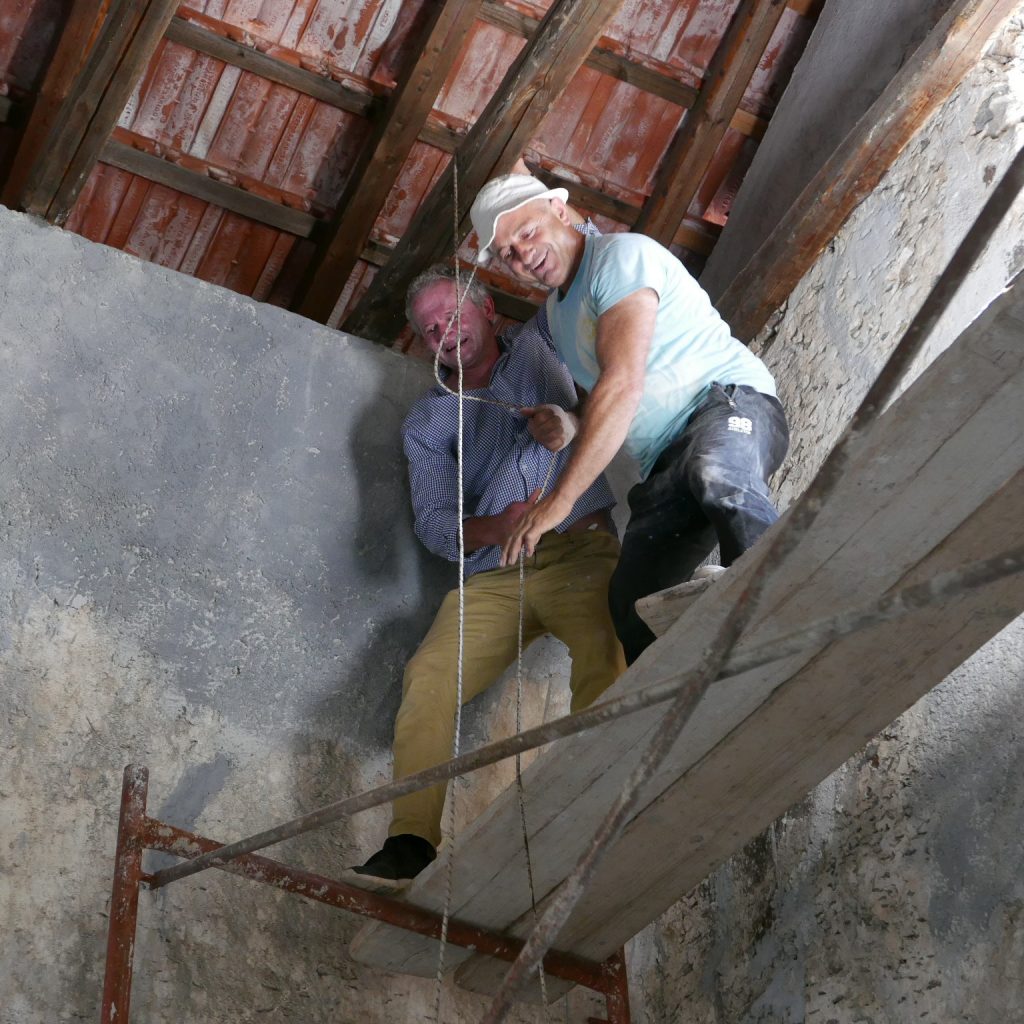 Σήμερα εγκαταστάσαμε ένα νέο παράθυρο στην παλιά εκκλησία μαζί με τον Άδωνη.
 - Τα παιδιά από τα Χανιά επισκέπτονται το Βλάτος
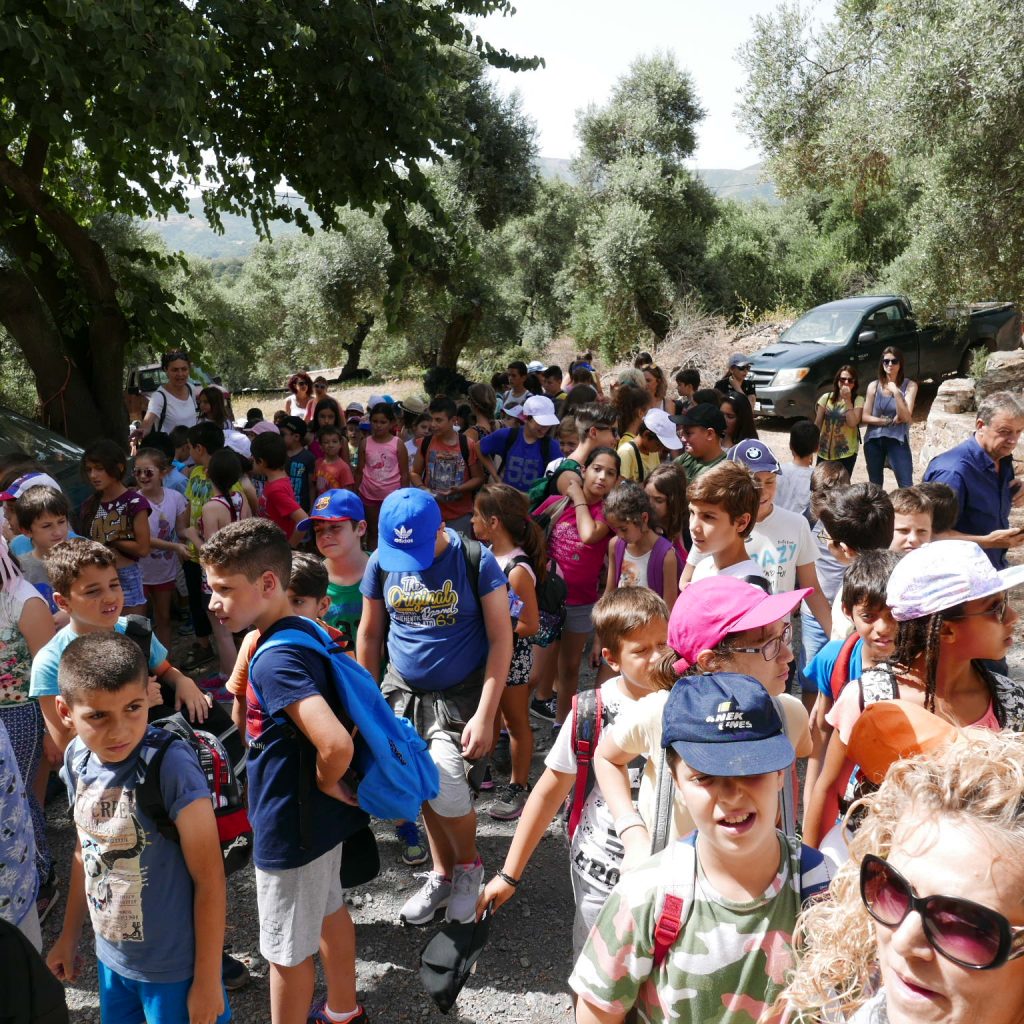 Την υπέροχη αυτή μέρα 180 μαθητές από τα Χανιά επισκέφτηκαν το μουσείο Βλάτου. Παρουσιάστηκαν μερικές φρέσκες σπιτικές λεμονάδες.
 - Βοτανικές εικόνες
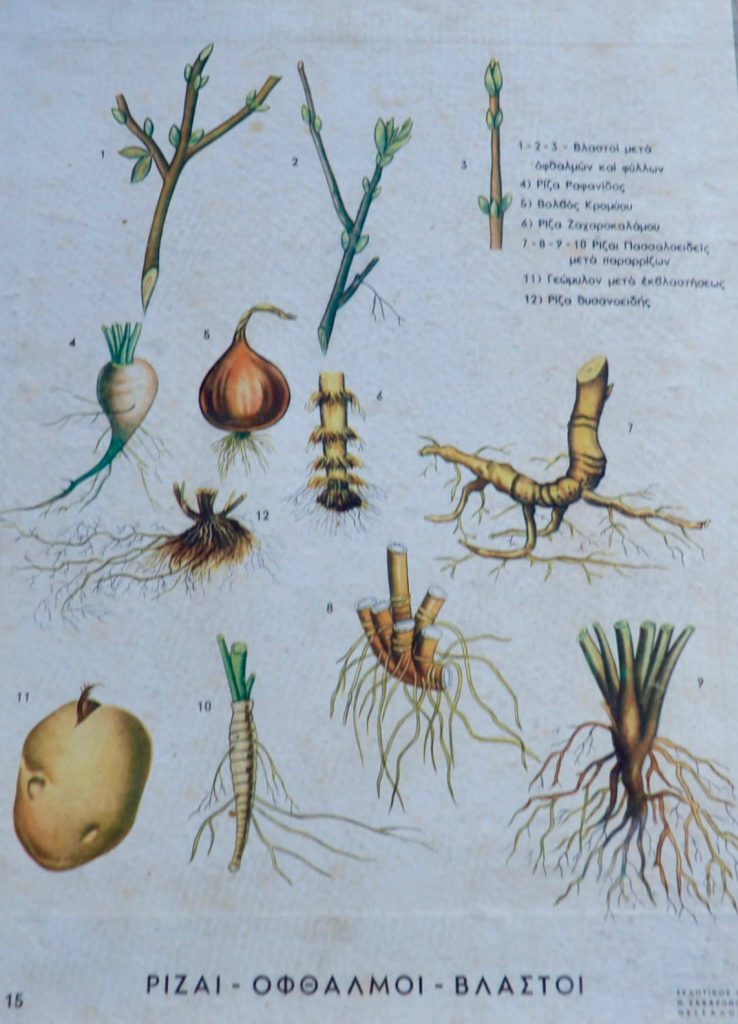 Βοτανικές εικόνες στο μουσείο που χρησιμοποιείται στο σχολείο.
 - Το Μουσείο Βλάτου Κισάμου παρουσιάζει πορτραίτα των Κρητικών ήρωων
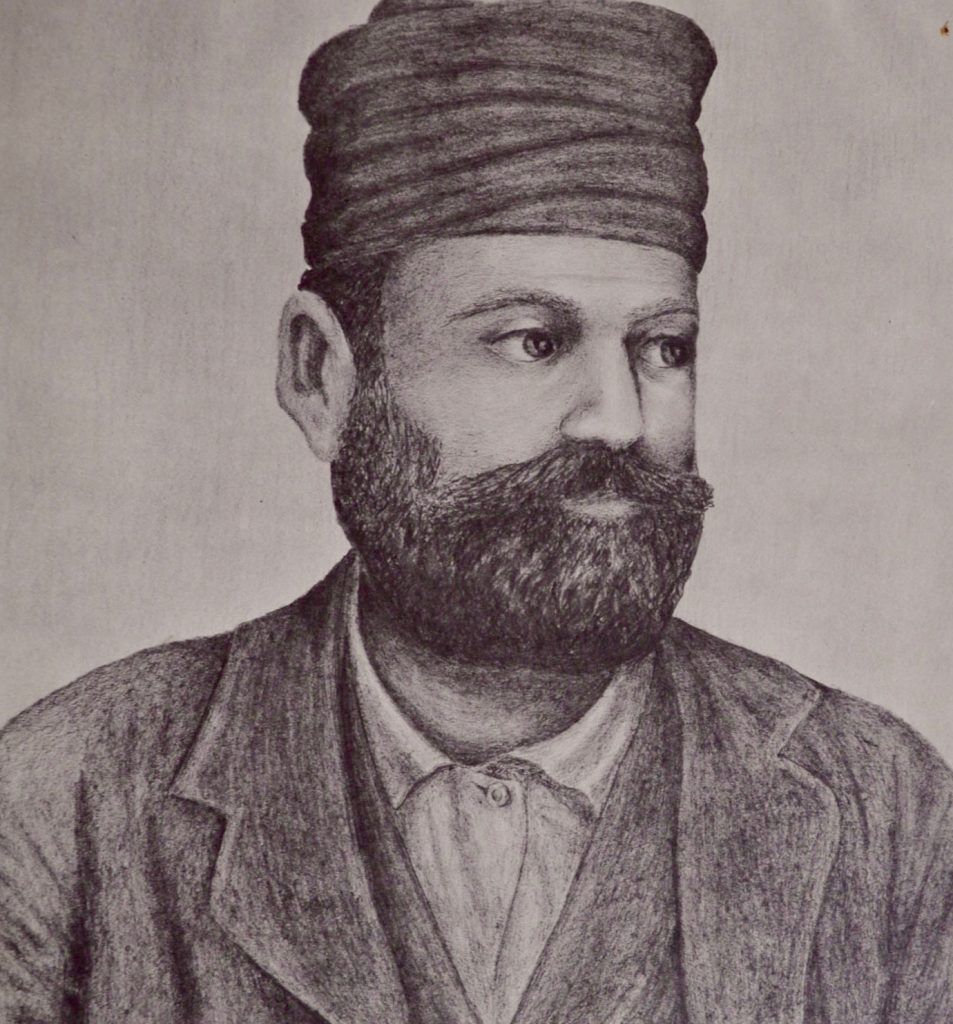 Το Μουσείο Βλάτου Κισάμου παρουσιάζει πορτραίτα των Κρητικών ήρωων
 - Μέσα στο μουσείο μαςΤο 2017 με τη βοήθεια των χωριανών δημιουργήθηκε το λαογραφικό μουσείο Βλάτους. Διατηρεί μια έκθεση της παλιάς αίθουσας διδασκαλίας, γεμάτη με παλιά θρανία, όμορφους χάρτες και εικόνες και μια μεγάλη συλλογή βιβλίων που χρονολογείται από τον δέκατο ένατο αιώνα. Επίσης… Read more: Μέσα στο μουσείο μας
- Η παλιά εκκλησία πίσω από το μουσείοΠίσω από το μουσείο του Βλάτους βρίσκεται ένα παλιό κτίριο κτισμένο σε ένα όμορφο φυσικό περιβάλλον προσαρμοσμένο στην αρχιτεκτονική του τόπου μας. Όταν ολοκληρώθηκε το 1886, η οροφή αυτής της “εκκλησίας” κατέρρευσε. Αυτό οι χωριανοί το θεώρησαν ως κάτι ανεπιθύμητο οπότε η… Read more: Η παλιά εκκλησία πίσω από το μουσείο
- Πορτρέτα στο μουσείο μας
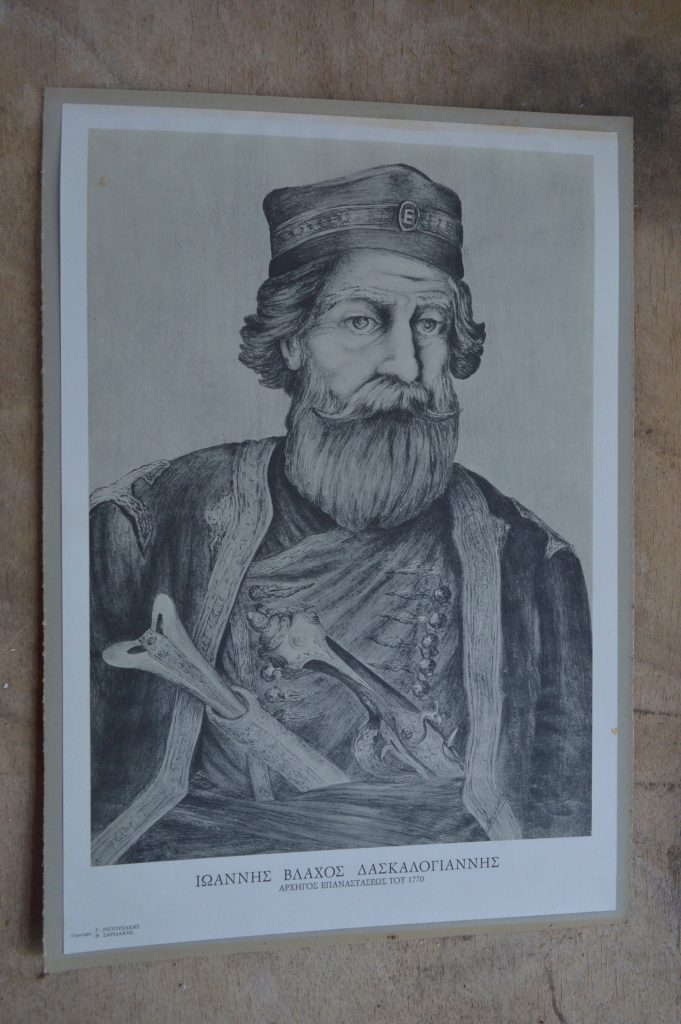 Κατά την προετοιμασία του μουσείου μας ανακαλύψαμε πολλά πορτρέτα που χρησιμοποιήθηκαν στο παλιό σχολείο. Μπορείτε να τα βρείτε στο μουσείο μας. Όνομα στο πορτρέτο: ΙΩΑΝΝΗΣ ΒΛΑΧΟΣ ΔΑΣΚΑΛΟΓΙΑΝΝΗΣ, ΑΡΧΗΙΓΟΣ ΕΠΑΝΑΣΤΑΣΕΩΣ ΤΟΥ 1770
 - Μέσα στο μουσείο μας
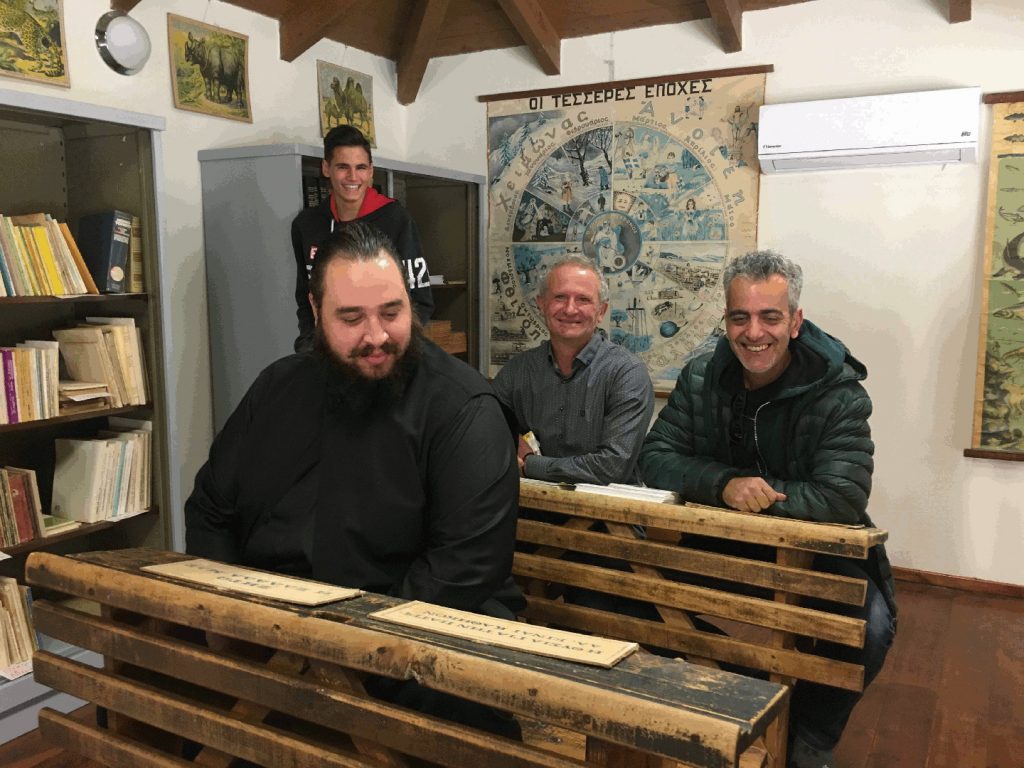 Το 2017 δημιουργήθηκε το λαογραφικό μουσείο Βλάτους. Διατηρεί μια έκθεση της παλιάς αίθουσας διδασκαλίας, γεμάτη με παλιά θρανία του ίδιου χώρου, όμορφους χάρτες και εικόνες και μια μεγάλη συλλογή βιβλίων που χρονολογείται από τον δέκατο ένατο αιώνα. Επίσης μεγάλη ποικιλία οργάνων χημικού… Read more: Μέσα στο μουσείο μας